Animal drawings with colour/graphite pencils for beginners…
Animals are one of my favorite subjects to draw — from wolves and birds to tiny insects. But it can be challenging, especially if you aim for a more realistic style. Most of my animal drawings have a cartoonish style created with Faber-Castell coloured pencils or a mix of watercolor pencils and paint pens. I free‑hand draw everything — I typically don’t use grids.
This means each piece carries the subtle irregularities and lively spontaneity that come from direct hand drawing. Lines may vary, compositions evolve as I work, and small, deliberate imperfections give the artwork character and a uniquely human touch. This approach is especially suited to capturing the organic shapes and textured details of Australian wildlife and landscapes, where precision would sometimes flatten the life and movement I aim to portray.
Tips for drawing animals (realistic or cartoon):
When drawing animals in a realistic style, start by applying strokes in the direction of the fur, layering light-to-dark colours. Begin with a light base to establish overall tone, then build midtones and finally add darker values for depth and contrast. Overlapping strokes for dense fur, longer strokes for sleek coats. Use photo references to understand where the light catches the fur, where shadows fall, and where colour changes occur. Use subtle colour shifts (warm and cool tones) to avoid flatness and to convey form.
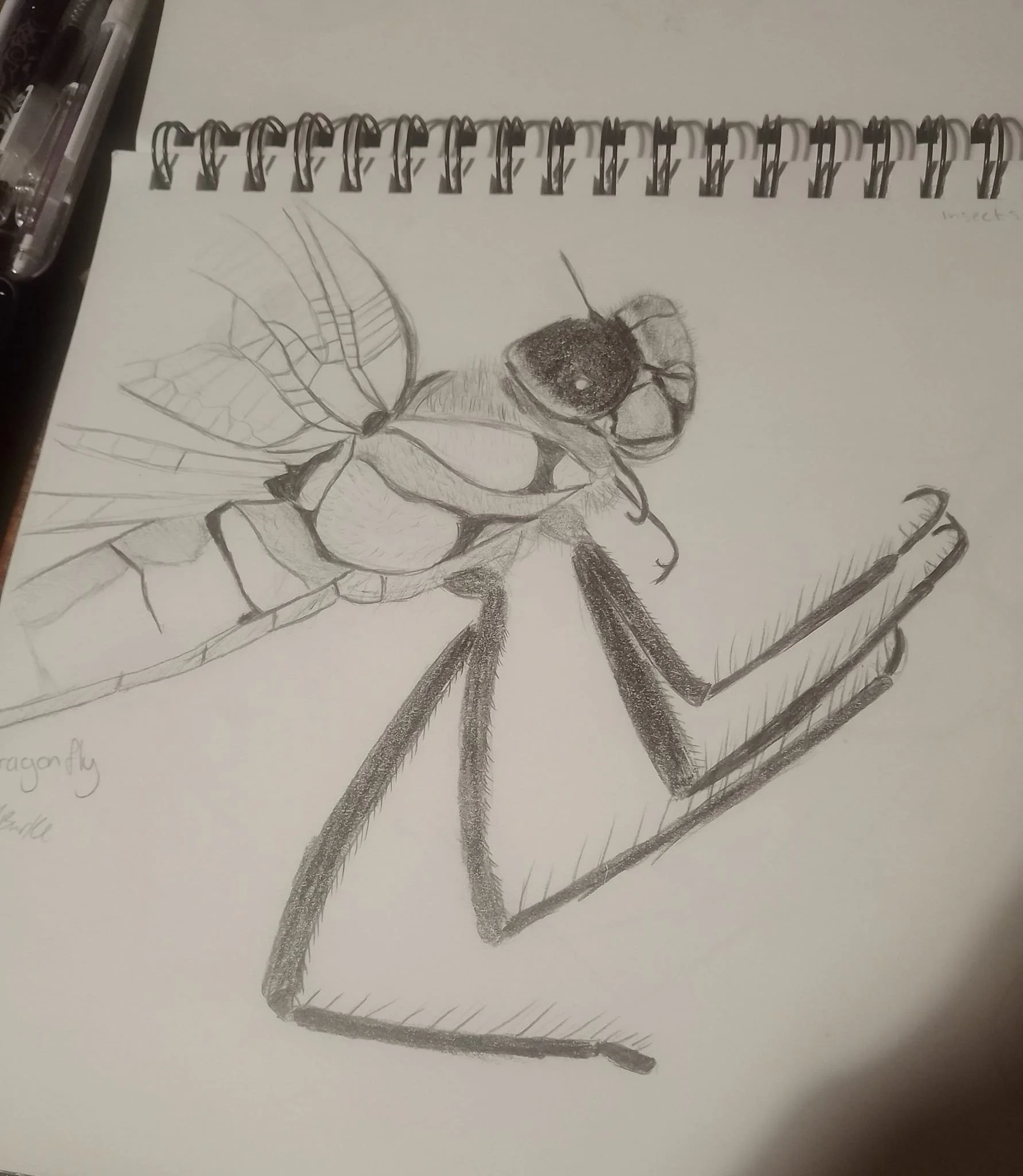
Dragonfly- Realistic grahite pencil sketch
This video demonstrates how to draw a grid.
The grid method:
To add depth and maintain accurate proportions. Divide both your reference and your drawing surface into the same number of squares. Focus on one square at a time to transfer shapes and values precisely. The grid helps place key features (eyes, muzzle, joints) and keeps anatomical relationships consistent as you render overlapping planes. Combine the grid with careful observation of edges—soft transitions for rounded forms, sharper edges where planes change or fur clumps.
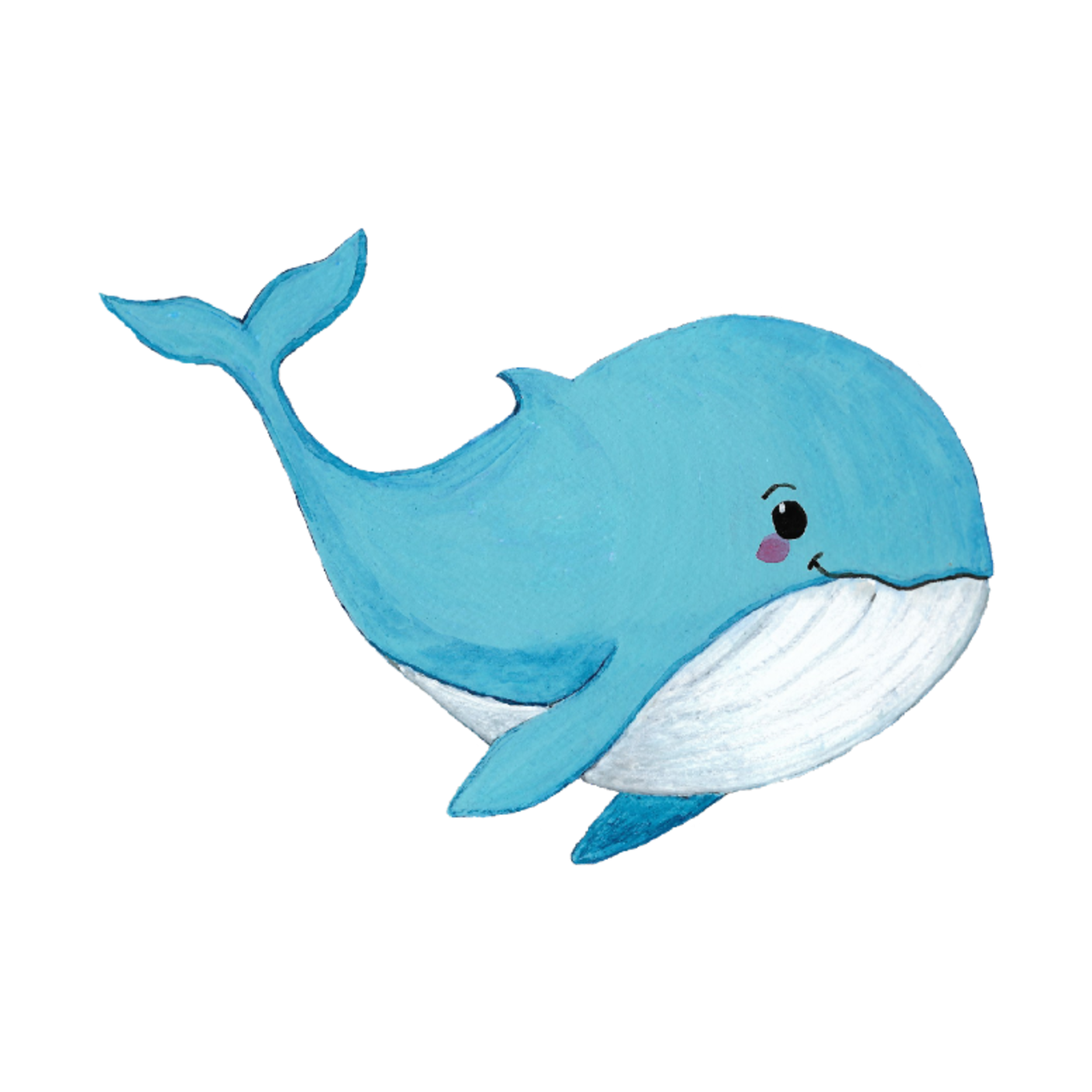
Blue Whale - Cartoon watercolour pencils and paint pens
For cartoon animals, simplify:
Use basic shapes such as circles, ovals, or rectangles. Use thick, confident outlines to define form. Keep facial features basic—large expressive eyes, simplified noses and mouths—and exaggerate proportions (big head, small body, oversized paws) to increase charm. Limit detail and texture; rely on bold shapes, clear value separation, and a restrained colour palette. A few well-placed lines and a simple shadow can suggest volume without overworking the drawing.
Combine approaches when needed: start with realistic observation to understand structure, then simplify into shapes and stylised marks for a stronger, more characterful design.
General tips for both styles
Start simple: Pick easy animals, your favourite animal or focus on a specific part of that animal (eyes, nose etc).
Practice shapes: When drawing animals, start by outlining their basic shapes —For example, an elephant has an almost squareish shaped head, a round body, and large flat, curved ears.
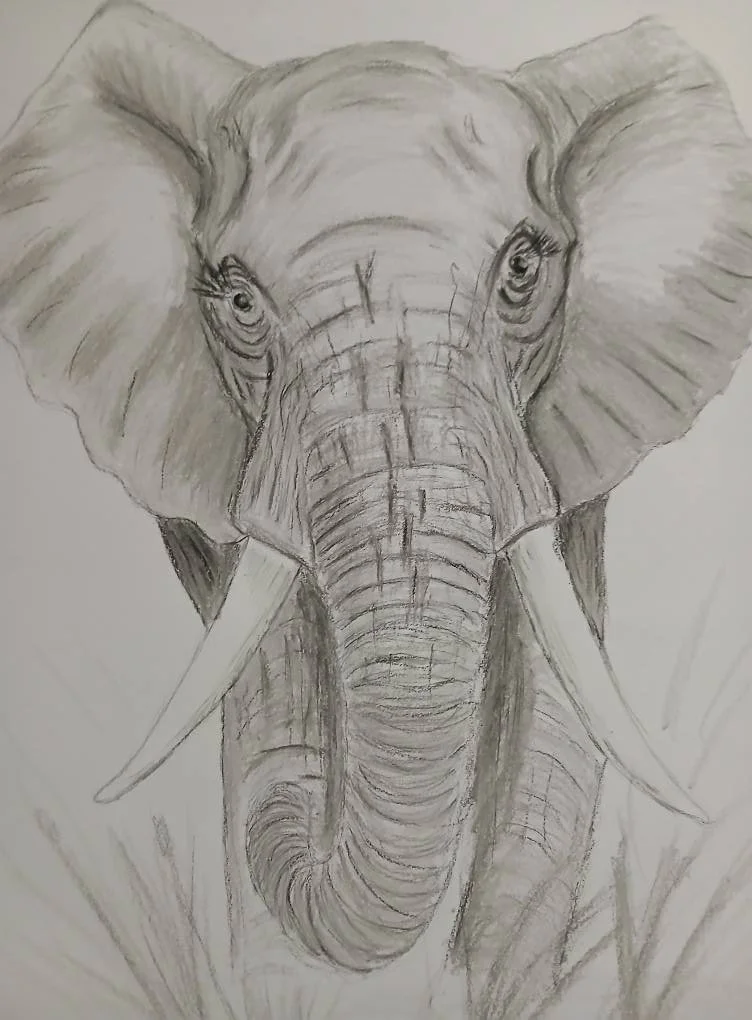
Elephant -Realistic rough graphite sketch
There is no right or wrong: There’s no single right way to make art — experiment with different technqiues to find what you like. Play around and don’t be affraid of mistakes. Have fun with it!
